

There’s a category of problem I used to just put up with.
They’re a familiar type - not big enough to justify hiring someone. Not generic enough for an existing tool. Not quite small enough for me to get functional enough before I run out of time or motivation. Just this specific, frustrating little gap between “what software exists” and “what I actually need right now.” (with a dash of “what do I have time to accomplish” on top)
I used to file these away in a 10+ year-old, 20+ page long Google Doc called “Project List.” Now I just build them on my way out the door.
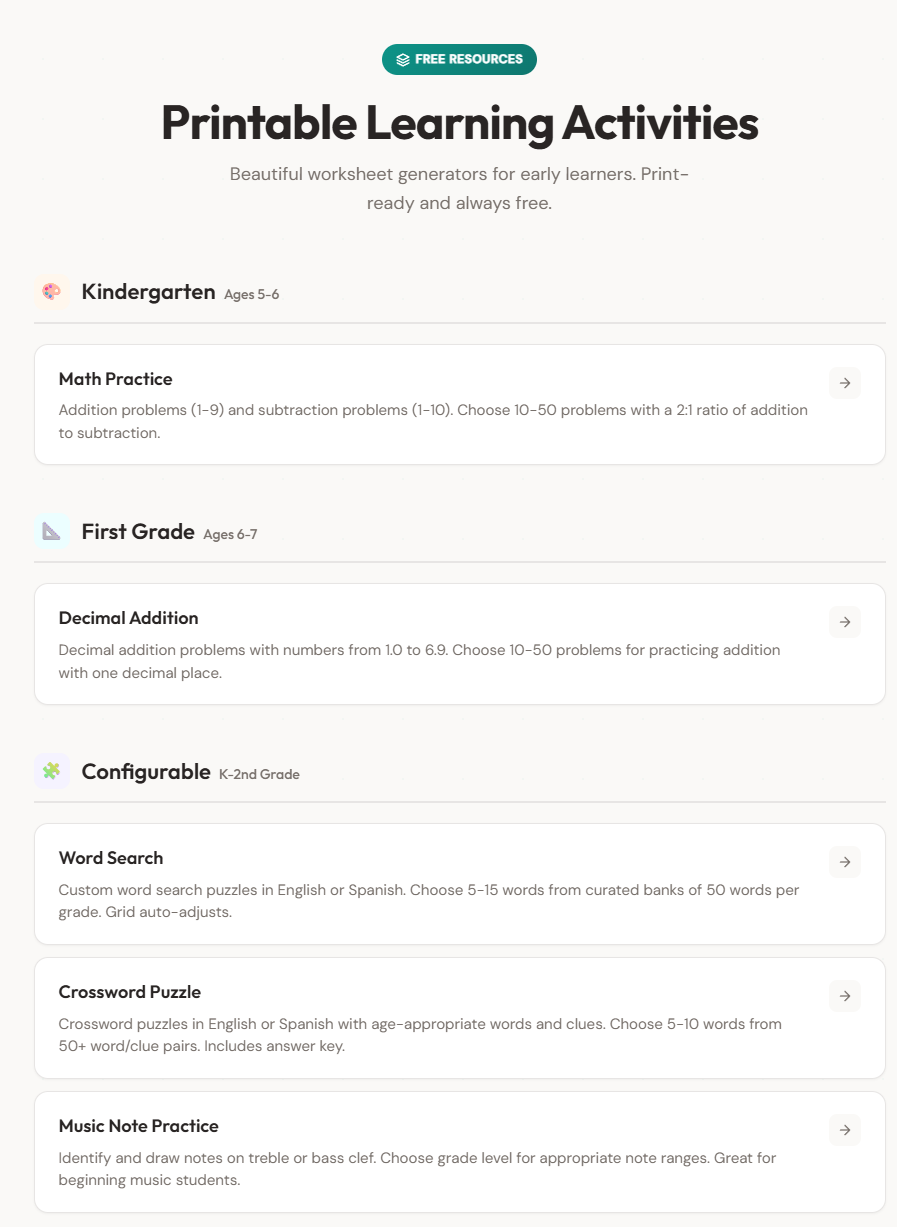
My sons both love doing math worksheets and puzzles like crosswords and wordsearches. I can’t explain it but I’m smart enough not to question it. I’d generate math problems for them by hand from time to time and we’d buy wordsearch books that they’d blast through in an afternoon. I got tired of those loops so I built a generator using Claude Code.
It’s a simple site: pick a grade level, pick a type (addition, decimal math, wordsearch, etc.), set how many problems you want and print. Every refresh randomizes the content. It cost me maybe an hour one afternoon and I’ve printed dozens of sheets from it.
Before AI-assisted building, that would’ve been a weekend project - maybe longer if I got stuck trying to optimize the wordsearch generator. Now it’s the kind of thing I can prototype before lunch and polish after they go to bed.
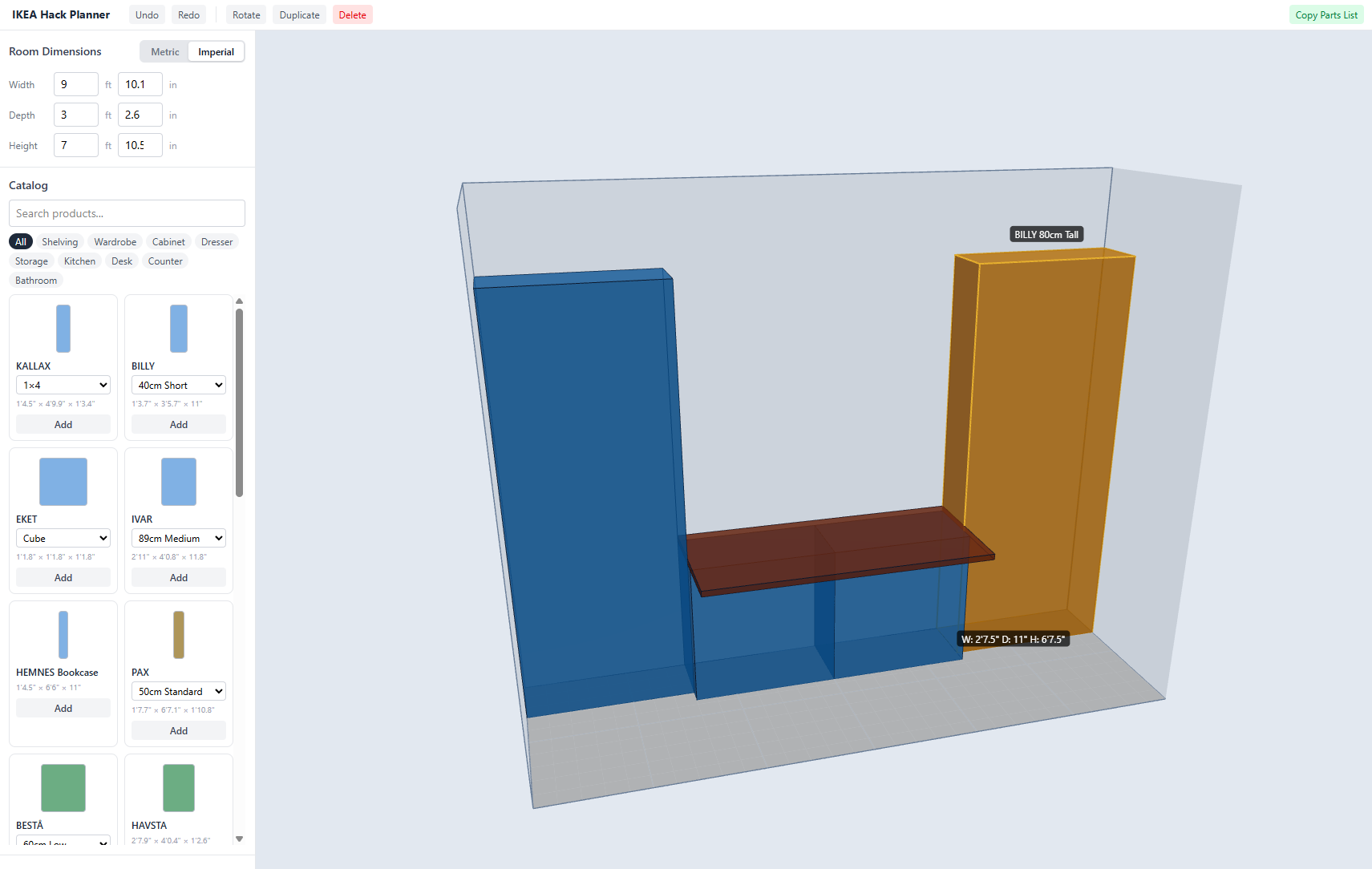
This morning’s example was a bit more ambitious, but took no additional effort on my part: a planning app for IKEA hackers.
If you’ve spent any time in that community, you know the vibe - people turning flat-pack furniture and some trim into DIY built-in custom storage solutions, entertainment centers, etc. that looks like it cost ten times what it did. It’s genuinely clever but the planning process can be fidgety and IKEA’s room planner is pretty clearly not designed with this use case in mind.
So I used Claude Code to build a web app that knows the dimension of various cabinets, shelving units, countertops, etc. You set your room dimensions and it visualizes your space in 3D. Then you drag and drop IKEA pieces into it until you’ve got something you love. You can even customize the dimensions of countertops for a custom fit.
That’s it. That’s the whole app.
These two projects couldn’t be more different. One is for elementary school kids practicing basic math and doing puzzles. The other is for someone planning a built-in wall unit. But they came from exactly the same place: a specific, real need that no existing tool (or at least no existing tool that wasn’t an ad-burdened sloppy mess) was solving.
This is biggest thing I find genuinely exciting about AI-assisted building right now: the activation energy for solving a problem has collapsed.
The solutions I’m building aren’t works of art. They’re not scalable SaaS products. They’re not going to make anyone rich. They’re just useful. Specifically, narrowly, perfectly useful for one particular situation. One-offs that would’ve been impractical to build before but are totally reasonable to build now.
The question isn’t “is this worth building?” anymore. It’s just “would this be helpful?”
If the answer is yes, you can have it in minutes. I keep wondering what happens when it’s not just developers asking that question - when the teacher, small business owner, the hobbyist with zero coding background gets there too.
I don’t think this changes what software is, exactly. But it changes who gets to have it and for what. The long tail of problems that were previously too small to justify custom solutions is suddenly, quietly, becoming solvable.
Which means the worksheet your kid wants, or the IKEA hack you’ve been mulling for weeks? There’s an app for that now. You just have to ask for it.